Choosing an orthopedic implant material is not a simple matter of selecting the strongest metal. It is a clinical decision involving anatomy, movement, tissue response, manufacturing quality, and long-term evidence. The central question, “What materials are used in orthopedic implants,” opens a much broader discussion about how implants behave inside the human body.
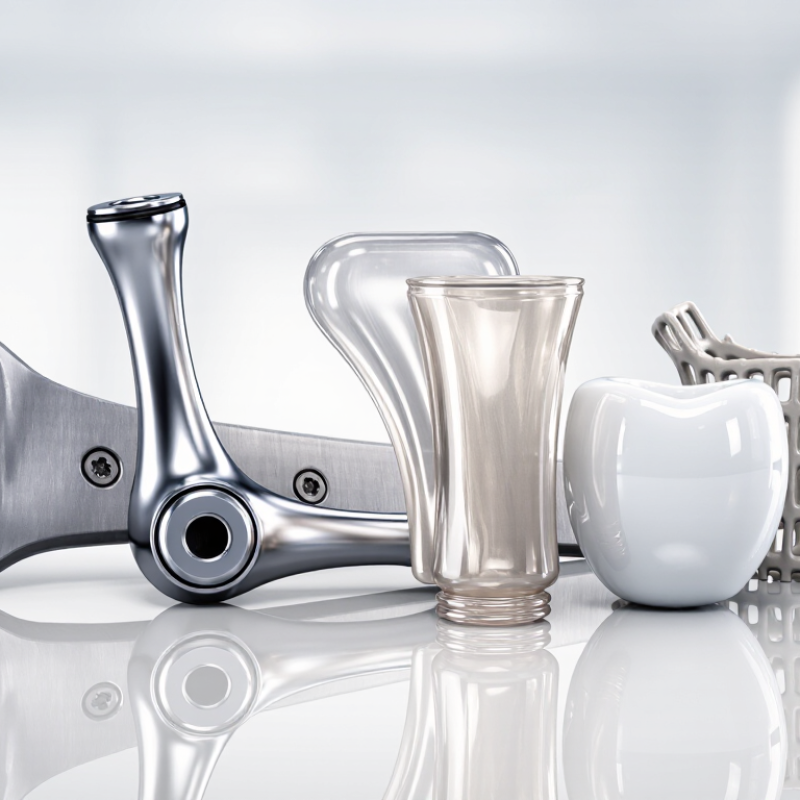
Titanium alloys are widely used for plates, screws, and joint components because they are strong, relatively lightweight, and generally well tolerated. Cobalt-chromium alloys offer high wear resistance for demanding joint surfaces. Ultra-high-molecular-weight polyethylene can reduce friction between artificial joint components. Ceramics provide smooth, hard surfaces, although they can be sensitive to damage during handling or placement. PEEK is also used in selected spinal devices because its stiffness can more closely resemble bone than some metals.
No material is perfect.
Dr. Joshua J. Jacobs, a recognized orthopedic biomaterials researcher, has stated, “The success of an implant depends on the interaction between its material, design, and the biological environment.” This principle explains why surgeons and engineers do not judge materials by strength alone. They examine fatigue resistance, corrosion behavior, wear particles, bone integration, and imaging compatibility. Clinical experience also matters. A material that performs well in a laboratory may behave differently under years of walking, lifting, or repeated impact. That gap deserves honest attention. Material choice should therefore be evidence-based, patient-specific, and reviewed against current clinical data, regulatory standards, and the implant’s intended purpose.
Why Are Different Materials Used in Orthopedic Implants?
What Are Orthopedic Implants and What Functions Must They Perform?
Orthopedic implants are medical devices that replace, support, or repair damaged bones and joints. They include hip stems, knee components, spinal cages, plates, screws, and trauma nails. Their purpose is practical: restore movement, carry body weight, maintain alignment, and reduce pain. The World Health Organization’s 2022 report estimates that musculoskeletal conditions affect about 1.71 billion people worldwide. That scale explains why implant performance matters beyond the operating room.
Each material serves a different mechanical job. Titanium is light, strong, and relatively friendly to bone, so it often supports fixation. Cobalt-chromium alloys resist deformation in heavily loaded joint surfaces. Ceramic components offer very low wear and smooth motion. Ultra-high-molecular-weight polyethylene helps reduce friction between moving parts. No material is perfect. A harder surface may increase brittleness, while a flexible material may wear sooner. That trade-off matters.
Implants must also tolerate body fluids, repeated loading, sterilization, and years of movement. The 2024 American Joint Replacement Registry Annual Report included data from more than three million hip and knee procedures, showing the value of long-term monitoring. Such registries track revision surgery and reveal problems that laboratory testing can miss. A successful implant is not merely strong. It must fit anatomy, remain stable, limit wear particles, and support safe recovery. In practice, material selection still involves judgment, patient factors, and some uncertainty.
| Material Category | Typical Material Examples | Key Material Properties | Primary Implant Functions | Common Orthopedic Applications | Important Considerations |
|---|---|---|---|---|---|
| Titanium and Titanium Alloys | Commercially pure titanium; titanium–aluminium–vanadium alloys | High strength-to-weight ratio, excellent corrosion resistance, relatively low elastic modulus compared with stainless steel, and good biocompatibility | Provide structural fixation while helping reduce implant weight and stress shielding; support bone attachment when the surface is appropriately prepared | Bone plates, intramedullary nails, spinal fixation systems, dental and maxillofacial implants, and porous components for bone ingrowth | More difficult to machine than some steels; titanium alloy surfaces can contribute to wear when used against certain bearing materials, so it is not ideal for every articulating surface |
| Cobalt–Chromium Alloys | Cobalt–chromium–molybdenum alloys | Very high strength, high hardness, excellent wear resistance, and strong corrosion resistance | Maintain a durable, smooth bearing surface and resist deformation under repeated loads | Femoral components in total knee and hip replacements, joint resurfacing components, and selected high-wear bearing parts | Stiffer and denser than titanium; the material’s high hardness can be beneficial for wear resistance but may increase demands on the opposing bearing surface |
| Stainless Steel | Medical-grade austenitic stainless steels, commonly containing iron, chromium, nickel, and molybdenum | Good strength, corrosion resistance, manufacturability, and relatively cost-effective production | Provide temporary or permanent mechanical stabilization and maintain alignment during bone healing | Trauma plates, screws, wires, external-fixation components, and some reusable orthopedic instruments | Generally stiffer than bone and may be more susceptible to corrosion or metal-ion release if damaged, poorly finished, or exposed to unfavorable conditions; material selection must consider patient sensitivity |
| Ultra-High-Molecular-Weight Polyethylene | Conventional or highly cross-linked polyethylene | Low friction, good toughness, low density, and suitability for bearing applications | Act as a low-friction counterface, distribute contact loads, and reduce direct metal-to-metal contact in artificial joints | Acetabular liners in total hip replacements, tibial inserts in knee replacements, and other joint-bearing components | Wear particles can accumulate over time and may contribute to bone resorption around an implant; highly cross-linked grades generally improve wear resistance but may have different fatigue and fracture characteristics |
| Ceramics | Alumina, zirconia, and alumina–zirconia composite ceramics | Very high hardness, excellent scratch and wear resistance, chemical stability, and low friction in suitable articulations | Provide a hard, smooth bearing surface intended to reduce wear in selected joint replacements | Femoral heads and selected bearing components in hip arthroplasty; some specialized knee or other joint applications | Brittle compared with metals and polymers; careful design and handling are required to reduce the risk of chipping, fracture, or damage during implantation |
| Polyether Ether Ketone (PEEK) | Medical-grade PEEK and carbon-fiber-reinforced PEEK | Radiolucency, chemical resistance, fatigue performance, and an elastic modulus closer to bone than many metals | Provide structural support while allowing radiographic assessment of surrounding bone and implant position | Spinal interbody cages, selected trauma devices, cranial implants, and patient-specific reconstructive components | Usually requires surface modification, coatings, or an appropriate implant design to improve bone attachment; lower stiffness does not automatically guarantee successful bone integration |
| Polymethyl Methacrylate (PMMA) | Acrylic bone cement | Forms a hard polymer after curing, fills small gaps between bone and implant, and provides immediate mechanical fixation | Anchor selected joint replacement components and transfer loads between the implant and prepared bone surface | Cemented hip and knee arthroplasty and vertebral augmentation procedures | It is primarily a fixation medium rather than a load-bearing implant replacement; curing generates heat, and long-term fixation can be affected by fatigue, cracks, or bone loss |
| Calcium Phosphate Ceramics | Hydroxyapatite and beta-tricalcium phosphate | Bone-like mineral chemistry, osteoconductivity, and potential for gradual resorption depending on composition and structure | Encourage bone growth along an implant surface or fill selected bone defects | Coatings on metallic implants, bone-graft substitutes, and small to moderate bone-defect fillers | Usually more brittle and less mechanically strong than metals; they are generally used where biological support is needed rather than as standalone components for high-load fixation |
| Magnesium-Based Biodegradable Alloys | Magnesium alloys designed for controlled degradation | Low density, bone-compatible elastic behavior, and the ability to gradually dissolve under controlled conditions | Provide temporary fixation that may reduce the need for a second procedure to remove hardware | Selected research and limited clinical applications such as temporary screws or small fixation devices | Degradation rate, hydrogen generation, mechanical strength, and local biological response must be carefully controlled; use depends on device design and regulatory approval |
| Porous Metallic Structures | Porous titanium or cobalt–chromium structures produced by additive manufacturing or other fabrication methods | Interconnected pores, reduced effective stiffness, and a three-dimensional surface that can support bone ingrowth | Promote biological fixation while providing structural support and improving contact with irregular bone surfaces | Revision joint components, spinal implants, acetabular augments, and custom bone-reconstruction devices | Pore size, connectivity, surface cleanliness, fatigue strength, and manufacturing quality are critical; porous structures may be more difficult to inspect and clean |
Orthopedic implants are medical devices that replace, support, or repair damaged bones and joints. Examples include hip stems, plates, screws, spinal cages, and knee components.
An implant may carry body weight, stabilize a joint, support healing, and reduce pain. It must fit anatomy and remain stable during repeated movement. Strength is not enough.
Different materials solve different mechanical problems. Metals provide strength, ceramics support smooth motion, and polymers can reduce friction. Trade-offs remain.
Titanium alloys are strong, relatively light, and comparatively flexible. Their flexibility may help reduce stress shielding around nearby bone. Results still depend on design and bone quality.
Cobalt-chromium alloys resist deformation and surface wear in heavily loaded contact areas. Ceramic components are hard and smooth, supporting low-wear movement. Ceramics may be less tolerant of sudden impact.
Polymeric materials can provide cushioning or low-friction surfaces between moving parts. They are generally less strong than metals. Their controlled movement can still help joint reconstruction.
Engineers examine fatigue, corrosion, abrasion, sterilization, and repeated loading. Long-term clinical records can track revision surgery and late problems. Laboratory results cannot show everything.
Bone quality, activity level, alignment, soft tissue, implant shape, and connection method all matter. Body fluids and years of movement can challenge the device. That uncertainty matters.
Yes. Wear particles, loosening, or changing bone conditions may appear over time. Follow-up imaging can help detect concerns. The decision is not perfectly predictable.
Orthopedic implants are medical devices designed to replace, support, or stabilize damaged bones and joints. They must withstand body weight, repeated movement, and long-term mechanical stress while remaining safe inside the body. What materials are used in orthopedic implants depends on the implant’s function, location, and expected load. Metals are often selected for weight-bearing components because they provide high strength, toughness, and fatigue resistance. Their surface properties can also support secure attachment to bone when properly designed.
Ceramics may be preferred for their hardness, smoothness, and resistance to wear, especially in joint replacement applications. Polymers are useful when flexibility, low weight, or shock absorption is important, while composite materials can combine the advantages of multiple substances. Material selection also considers biocompatibility, corrosion resistance, tissue response, and the possibility of allergic reactions. Ultimately, the best material is chosen by balancing durability, flexibility, biological safety, and the specific demands of the patient and implant location.

 Weed Orthopedic Implants