A fracture may look clear on an X-ray, but treatment depends on its location and stability. Some breaks stay aligned in a cast or brace. Others need surgery to bring bone pieces together and keep them steady. An implant may be a plate, screw, pin, wire, or rod placed inside or alongside the bone. It acts like internal support while the body repairs the fracture. Not every broken bone needs one.
How do implants help treat broken bones? They can hold fragments in position, reduce unwanted movement, and help a patient begin appropriate movement sooner. The exact plan depends on the fracture pattern, nearby tissues, overall health, and daily needs. Surgeons use examinations and imaging to choose an approach and explain its likely benefits and risks. Healing still takes time. An implant does not make a bone mend instantly, and recovery can involve pain, follow-up scans, and rehabilitation. Plans may change as healing progresses.
There are trade-offs. Surgery can carry risks such as infection, bleeding, or problems with the implant, while some devices may remain in place permanently. The right choice is personal, and a clinician should explain alternatives for each case. Even a technically successful repair can feel slow or frustrating; that part is easy to overlook. This guide introduces common implant types, how fixation works, and what recovery may involve, without replacing advice from an orthopedic professional.
When a bone breaks, the first question is not which implant to use. It is whether the fracture can heal safely in a stable position. A clinician checks the injury, examines the skin and circulation, and asks about pain, movement, health, and daily activities. X-rays usually show the break; a CT scan may help when the fracture reaches a joint or has several pieces. Small details matter.
An implant, such as a plate, screw, rod, or pin, may be considered if the bone is badly displaced, unstable, or unlikely to stay aligned in a cast. Some fractures heal well with a splint or cast instead. The choice depends on the fracture’s location and pattern, nearby soft tissues, and the patient’s overall health. Surgery also has risks, including infection and problems with healing, so the care team should explain why it is being recommended. A scan helps, but it does not make the decision by itself.
Tips: Ask what the images show, what could happen without surgery, and how follow-up will confirm healing. Share medicines, allergies, and prior health problems. Seek urgent care for an open wound, a cold or numb hand or foot, or rapidly worsening pain. Pain alone is not enough to judge the fracture.
Choosing an implant starts with the bone and break pattern, not a catalogue. A thin, osteoporotic bone may offer weaker screw purchase than dense bone. A simple fracture may need a plate or nail; a complex break can require an implant that controls rotation and shortening. For older adults with hip fractures, the American Academy of Orthopaedic Surgeons’ 2021 clinical practice guideline supports either a sliding hip screw or a cephalomedullary device for stable intertrochanteric fractures. It recommends a cephalomedullary device for unstable, reverse-obliquity, and subtrochanteric fractures. The pattern matters.
Patient needs matter, too. Walking goals, other illnesses, skin condition, and ability to follow weight-bearing instructions can affect the plan. AAOS reports that more than 300,000 Americans aged 65 and older are hospitalized for hip fractures each year (OrthoInfo, “Hip Fractures”). That scale makes sound decisions important, but no single implant suits every patient. The evidence is not perfectly tidy; surgeons still weigh imaging, bone quality, and what they find during surgery. A second opinion can help when options feel unclear.
Tips: Ask how the fracture pattern affects implant choice and when you may bear weight. Mention prior fractures, osteoporosis treatment, and mobility at home. Details matter.
Before surgery, your care team will review X-rays or scans and explain how an implant may hold the broken bone steady. Ask what movement or weight-bearing to expect afterward. Plans can change when the surgeon sees the fracture directly. That uncertainty can be unsettling.
Share a complete list of medicines, vitamins, and supplements, along with allergies and past reactions to anesthesia. Do not stop prescribed medicines unless your clinician tells you to. Follow the team’s instructions about eating and drinking before surgery. Small details matter. Report a fever, new cough, skin wound, or redness near the injured area; these may affect surgical timing. If you smoke, ask about support for stopping, since smoking can slow bone healing.
Prepare your home before the operation: move loose rugs, keep a phone within reach, and place water and essentials at waist height. Arrange a ride and help with meals or bathing if needed. Ask how to care for the incision, when to seek help, and which symptoms require urgent attention. A written plan is useful, though it may feel like one more thing to manage.
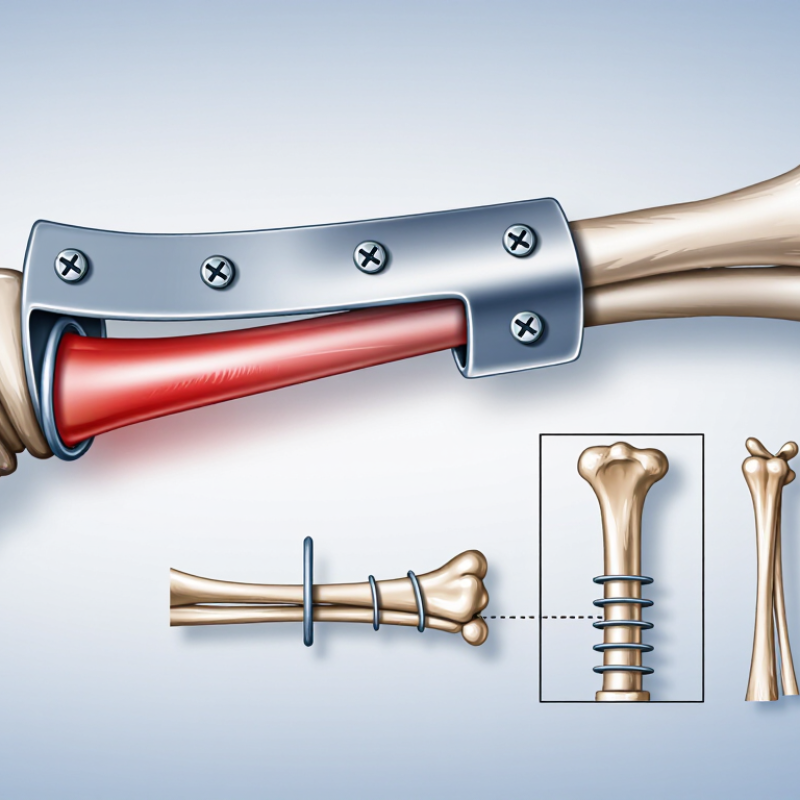
When a bone breaks, an implant can hold the pieces in a useful position while the body repairs them. The choice depends on the fracture’s location, shape, and stability, as well as bone quality and nearby soft tissue. A surgeon may use a plate and screws along the bone, or a rod inside its central canal. Some fractures need wires or other fixation. The aim is steady alignment, not simply adding more hardware.
During surgery, the pieces are positioned and secured so they are less likely to shift during healing. Stability can help patients begin movement sooner, but it does not mean the bone is ready for full weight or strenuous activity. The plan varies. Follow-up images let the care team check alignment and signs of healing, then adjust activity or rehabilitation. A small change in pain or function may matter, so patients should report concerns rather than guess.
Every implant involves a trade-off. More rigid fixation is not automatically better for every fracture, and healing can take longer than expected. The surgeon considers the risks of surgery, including infection and problems with healing, against the need to stabilize the break. Clear instructions about wound care, movement, and weight-bearing help protect the repair. New fever, worsening redness, drainage, or sharply increasing pain warrants prompt medical advice.
After a fracture is stabilized with an implant, rehabilitation helps restore movement while protecting the repair. Follow the surgeon’s weight-bearing instructions; plates, screws, and fracture patterns differ. The AAOS guideline for hip fractures in older adults says immediate weight bearing as tolerated may be considered after surgery, but this is not suitable for every patient. Small steps matter: sit at the bed’s edge, stand with support, then practice walking with the prescribed aid. Expect uneven progress. Some days feel like a step backward.
Follow-up visits let the care team check the wound, pain, movement, and healing on X-rays. Report new redness, drainage, fever, worsening pain, or sudden swelling promptly. In a study of 4,918 older adults with hip fractures, restricted weight bearing was associated with more adverse events and higher mortality than weight bearing as tolerated; the observational design cannot prove that restrictions caused those outcomes (Ottesen et al., Journal of Bone and Joint Surgery, 2018). Use that finding as context, not permission to change your plan. A physical therapist can adjust exercises as strength returns, while the surgeon decides when loading can increase. Keep appointments, even when recovery feels slow. Do not push through sharp pain.
They assess the bone’s position, stability, location, nearby tissues, and your overall health. Some fractures heal safely in a cast.
X-rays usually show the break. A CT scan may help when it reaches a joint or has several pieces. Images are only part of the decision.
A surgeon may use a plate with screws, a rod inside the bone, wires, or other fixation. More hardware is not always better.
Share your medicines, supplements, allergies, and past reactions to anesthesia. Report a fever, new cough, or nearby skin wound.
Do not stop them unless your clinician advises you to. Follow instructions about eating and drinking before the operation.
Move loose rugs, keep your phone close, and place water at waist height. Arrange a ride and help with meals or bathing if needed.
No. It holds the bone in position, but full weight-bearing or strenuous activity may need to wait. Follow your care team’s plan.
Seek advice for fever, worsening redness, drainage, or sharply increasing pain. An open wound, numb or cold limb, or rapidly worsening pain needs urgent care.
Treating a broken bone with an implant begins with a careful assessment of the fracture, the patient’s overall health, and whether the bone can heal safely without surgical support. Imaging and clinical evaluation help determine the break’s location, pattern, and stability. If an implant is recommended, the care team selects an appropriate option based on the bone involved, the fracture, and the patient’s needs, while explaining possible benefits and risks.
Before surgery, the team plans how to reduce risks and prepare for recovery. During the procedure, an implant such as a plate, screw, or rod may hold the bone in a stable position so it can heal. How do implants help treat broken bones? They support alignment and stability while the body repairs the fracture. After surgery, rehabilitation, follow-up visits, and any recommended imaging help track healing and guide a gradual return to daily activities. Recovery varies, so patients should follow their care team’s instructions.

Weed Orthopedic Implants