How to Know If You Are Allergic to an Orthopedic Implant?

Time:2026-10-09 Author:Madeline
0%

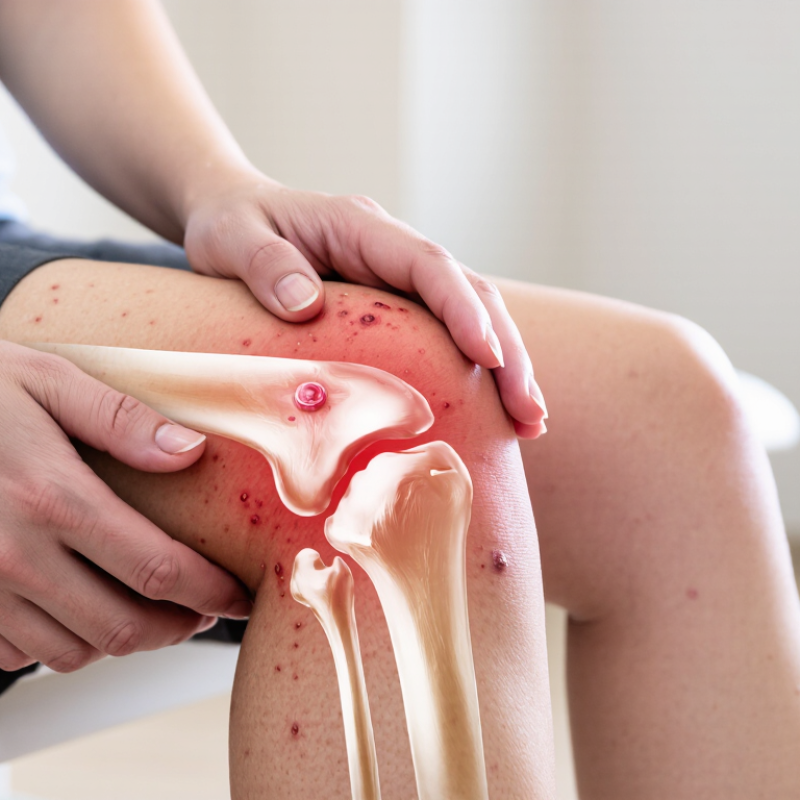
Can I be allergic to orthopedic implants? It is a reasonable question after surgery, especially when itching, redness, swelling, or persistent pain appears near the implant. Yet these symptoms do not automatically prove an allergy. Infection, poor wound healing, mechanical loosening, nerve irritation, and inflammatory reactions can look surprisingly similar.

Orthopedic researcher Joshua J. Jacobs, MD, has stated, “The diagnosis and treatment of metal hypersensitivity in joint arthroplasty remain controversial.” That caution matters. A suspected reaction requires more than a quick internet search or a single patch test. Your surgeon may review the implant’s metals, examine the skin, order imaging, and check for infection. An allergist or dermatologist may also perform testing, although test results do not always predict what happens deep inside a joint.

Look closely.

Notice when symptoms began. Record their location, intensity, and triggers. A rash beneath a watch may suggest contact sensitivity, but it does not confirm implant allergy. Pain during walking may point toward a mechanical problem instead. The evidence is imperfect, and some cases remain uncertain even after careful evaluation. This article explains the warning signs, diagnostic process, and questions worth asking before assuming your orthopedic implant is the cause.
How to Know If You Are Allergic to an Orthopedic Implant?

What an Orthopedic Implant Allergy Is

An orthopedic implant allergy is an immune reaction to a material used inside the body. It may involve metal ions, bone cement components, or coatings. The reaction is usually delayed, rather than immediate. T cells can respond weeks or months later.

This differs from infection, mechanical loosening, and ordinary surgical inflammation. Possible signs include persistent skin redness, itching, swelling, warmth, or unexplained pain near the implant. Some patients develop a rash away from the surgical site. These symptoms overlap with other complications, so they cannot confirm an allergy alone. The evidence remains imperfect.

Published research often estimates metal sensitivity in 10–15% of the general population, especially for nickel. However, confirmed implant allergy appears much less common. A review in the Journal of Bone and Joint Surgery reported that diagnosis remains controversial and lacks one reliable test. Large joint registries, including the National Joint Registry’s 21st Annual Report, track revision outcomes but rarely classify allergy separately. That limits accurate population data.

Evaluation usually combines medical history, physical examination, imaging, infection testing, and selected allergy tests. Patch testing may identify skin sensitivity, but it does not perfectly predict deep-tissue reactions. Blood tests also have limitations. An orthopedic surgeon and an allergy specialist should interpret results together. A painful implant should not be removed solely because a screening test is positive.

Common Signs and Symptoms of Implant-Related Allergic Reactions

How to Know If You Are Allergic to an Orthopedic Implant?

Common Signs and Symptoms of Implant-Related Allergic Reactions

Implant-related allergy is uncommon, but it can resemble infection or mechanical loosening. A 2018 review in Bone & Joint Journal reported that metal sensitivity is found in roughly 10–15% of people tested, while true implant reactions remain rare. Symptoms may include persistent itching, redness, eczema-like patches, warmth, swelling, or a burning sensation near the surgical area. Some patients also report unexplained pain, stiffness, or tenderness months after healing.

The skin may look dry and irritated, almost like a rash beneath a watch strap. However, deep implant reactions can occur without visible skin changes. The American Academy of Orthopaedic Surgeons notes that diagnosis is difficult and remains controversial. Doctors usually review your medical history, examine the joint, order imaging, and rule out infection. Patch testing or blood testing may support the evaluation, but neither test proves that an implant caused the symptoms. That limitation deserves more attention.

Tips: Record when symptoms began, where they appear, and whether jewelry causes similar irritation. Photograph changing rashes in natural light. Do not remove or replace an implant based only on an allergy test. Seek prompt medical care for fever, spreading redness, wound drainage, sudden swelling, or rapidly increasing pain. These signs may indicate infection or another urgent complication, not allergy. A consultation with an orthopedic specialist and, when appropriate, a dermatologist can create a more reliable assessment.

Medical Tests Used to Identify Implant Allergies

How to Know If You Are Allergic to an Orthopedic Implant?

Medical Tests Used to Identify Implant Allergies

Identifying an orthopedic implant allergy requires more than a skin rash or persistent pain. An orthopedic surgeon usually reviews your symptoms, surgical history, implant materials, and the timing of each reaction. Swelling, warmth, itching, or wound problems may have several causes. Infection, loosening, mechanical irritation, and poor healing can look similar.

Blood tests may help exclude infection. C-reactive protein and erythrocyte sedimentation rate can reveal inflammation, but they cannot confirm an implant allergy. Allergy specialists may perform patch testing with suspected metals or other materials. This test examines a skin reaction. It does not perfectly predict how deep tissue will respond around an implant.

Some clinics use a lymphocyte transformation test on a blood sample. Its availability and interpretation vary, and medical experts still debate its accuracy. A positive result should not stand alone. It needs clinical context.

In difficult cases, doctors may examine tissue near the implant. A biopsy can show inflammatory patterns, while cultures help detect hidden infection. Imaging may also identify loosening or surrounding bone changes. These steps matter because allergy is often a diagnosis of exclusion. There is no single definitive test.

Results can be confusing.

A positive skin test may not explain the pain. A normal result may not completely rule out a reaction. Careful communication between the surgeon, allergist, and patient supports safer decisions. Keep records of earlier metal reactions, medications, wound changes, and symptom dates. That detail is easy to overlook, yet it may change the investigation.

Conditions That Can Mimic an Implant Allergy

A painful or itchy orthopedic implant does not automatically mean an allergy. Several conditions can create similar symptoms, making self-diagnosis unreliable. Infection may cause warmth, swelling, drainage, fever, or increasing pain. Sometimes, fever is absent. That detail can mislead patients.

Mechanical loosening can produce deep aching, clicking, or pain during walking. Imaging may reveal changes around the implant, but early findings can be subtle. Nerve irritation may cause burning, tingling, or electric sensations near the surgical area. These symptoms can resemble a skin reaction, especially when discomfort spreads.

Some patients develop contact dermatitis from dressings, adhesives, surgical cleansers, or clothing. The rash usually appears on the skin, not deep around the joint. Complex regional pain syndrome may cause severe pain, color changes, sweating, or unusual sensitivity. Autoimmune inflammation can also mimic implant-related symptoms.

Clinicians usually review the surgery, symptom timing, wound appearance, blood tests, and imaging. Patch testing may help when a skin allergy is suspected, but it cannot prove that the implant caused deep inflammation. Testing has limits. In practice, the most useful diagnosis often comes from comparing several findings rather than trusting one result. Persistent swelling, drainage, fever, or rapidly worsening pain needs prompt medical assessment.

How to Know If You Are Allergic to an Orthopedic Implant?

Conditions That Can Mimic an Implant Allergy

Approximate reported rates after joint replacement are shown as ranges because they vary by joint, implant type, follow-up period, and patient population. Infection, loosening, instability, fracture, and complex regional pain syndrome can produce symptoms that resemble implant allergy. Clinically significant metal hypersensitivity is considered uncommon, and a positive skin or blood test alone does not prove that an implant is the cause.

Treatment Options and Implant Replacement Considerations

How to Know If You Are Allergic to an Orthopedic Implant?

Treatment should begin with careful investigation, not immediate implant removal. Pain, swelling, warmth, or a skin rash may suggest hypersensitivity, but infection and mechanical loosening can look similar. The National Joint Registry’s 21st Annual Report identifies infection, loosening, and fracture among important reasons for joint revision. Allergy is less common and remains difficult to confirm. Your surgeon may review your medical history, examine the skin, obtain blood tests, and use X-rays or advanced imaging. Joint aspiration may be necessary to exclude infection. Patch testing can support an allergy diagnosis, but it is not perfect. A negative result does not always settle the question.

Treatment depends on the cause and symptom severity. Mild skin irritation may improve with dermatological care and observation. Persistent pain, implant instability, bone loss, or confirmed infection requires a different plan. The International Consensus Meeting on Musculoskeletal Infection stresses systematic infection evaluation before revision surgery. This step matters, even when allergy seems obvious.

Implant replacement is a major operation. Surgeons may select alternative materials, such as titanium-based components, ceramic surfaces, or different bearing combinations. The choice depends on anatomy, bone quality, previous surgery, and available clinical evidence. The American Joint Replacement Registry reports that revision procedures carry distinct risks, including readmission and further reoperation. Results vary. Some patients improve quickly; others continue to hurt despite replacement. That uncomfortable uncertainty deserves an honest discussion before surgery, including tissue testing during revision and a clear plan for rehabilitation.

How to Know If You Are Allergic to an Orthopedic Implant? - Treatment Options and Implant Replacement Considerations

Clinical Dimension What May Be Observed How It Is Evaluated Typical Treatment Options Implant Replacement Considerations
Possible Symptoms Persistent pain, swelling, warmth, stiffness, reduced function, or an unexplained skin rash near or beyond the surgical area may occur. Symptoms can overlap with infection, loosening, instability, or other causes of implant failure. A clinician reviews the medical and surgical history, examines the joint and skin, and assesses the timing, severity, and progression of symptoms. Do not assume that symptoms are caused by allergy. Medical assessment is needed to identify urgent causes, especially infection or mechanical failure. Replacement should not be based on symptoms alone. The likely cause, implant stability, bone condition, and overall health must be assessed first.
Timing of Symptoms Reactions may appear soon after surgery or later. A delayed presentation does not prove an allergy because infection, wear debris, loosening, and mechanical problems can also develop over time. The clinician compares symptom onset with surgery, wound healing, rehabilitation, activity changes, medications, and any previous metal or implant reactions. Management is directed at the confirmed or most likely diagnosis rather than timing alone. A delayed revision may be appropriate when there is confirmed implant failure or persistent symptoms with a well-supported cause, but timing alone is insufficient.
Important Alternative Diagnoses Periprosthetic joint infection, aseptic loosening, instability, fracture, malposition, wear-related inflammation, nerve pain, referred pain, and dermatologic disease can resemble an implant-related allergic reaction. Evaluation may include physical examination, radiographs, blood tests, joint aspiration, and other imaging or laboratory tests when clinically indicated. Infection requires prompt specialist management. Mechanical problems may require rehabilitation, medication, activity modification, or revision surgery depending on the cause. Infection must be carefully excluded before elective implant revision because revision surgery in an infected joint requires a different treatment plan.
Medical History and Exposure Review Relevant history may include dermatitis from jewelry, belt buckles, watches, dental materials, occupational exposure, or prior orthopedic hardware. A past skin reaction does not automatically predict a deep implant reaction. The clinician documents the suspected material, previous reactions, medications, allergies, wound history, and any prior implant procedures. Avoiding unnecessary exposure and treating a separate skin condition may help, but these steps do not replace evaluation of the implant itself. If revision is considered, the surgeon should review the composition of the existing implant and discuss materials that may reduce exposure to a suspected allergen, while recognizing that no material guarantees zero risk.
Patch Testing Patch testing can identify delayed skin sensitivity to selected substances. It is primarily a test of skin exposure and does not reliably prove that an implant is causing deep-tissue symptoms. Testing is performed and interpreted by an appropriately qualified allergy or dermatology professional. The panel should be selected according to the patient’s history and suspected materials. A positive result may support avoidance planning, but it should be interpreted together with clinical findings, imaging, infection testing, and implant analysis when available. A positive patch test alone is generally not a sufficient reason for implant removal or replacement. A negative result also cannot completely exclude an implant-related immune response.
Blood Tests and Specialized Testing Blood-based metal or lymphocyte testing may be available in selected settings, but results can be difficult to interpret and do not consistently establish whether an orthopedic implant is the cause of symptoms. Tests should be ordered selectively and interpreted by specialists familiar with their limitations. Routine screening of every patient with an implant is not generally justified. Treatment decisions should rely on the complete clinical picture rather than an isolated laboratory result. A laboratory result should not independently determine revision surgery, especially when imaging, infection studies, and mechanical assessment do not support implant failure.
Initial Conservative Management When the implant is stable and urgent causes have been excluded, symptoms may sometimes be managed without immediate surgery. The care team monitors pain, function, skin findings, radiographs, inflammatory markers, and other relevant clinical measures over time. Options may include supervised physical therapy, activity modification, appropriate pain management, treatment of coexisting skin disease, and follow-up with the orthopedic specialist. Conservative care is generally more appropriate when symptoms are mild or improving and there is no evidence of infection, loosening, fracture, instability, or progressive tissue damage.
Medication and Skin Treatment A localized or generalized rash may have causes unrelated to the implant, including contact dermatitis, medication reactions, or common skin disorders. Dermatologic examination may help distinguish dermatitis from wound complications or infection. Medication review is also important. Treatment may include clinician-directed topical therapy or other allergy and dermatology treatments when a skin condition is confirmed. Self-treatment around a surgical wound should be avoided. Medication or topical treatment is unlikely to correct a mechanically loose or infected implant. Persistent or worsening symptoms require reassessment.
When Revision May Be Considered Revision may be discussed when there is persistent, significant disability and a well-supported link to implant-related disease, or when another clear indication such as loosening, infection, fracture, or instability is present. The decision typically incorporates symptoms, examination, serial imaging, infection workup, implant stability, alternative diagnoses, and the patient’s goals and surgical risk. Revision surgery is individualized and may involve removal or replacement of components, treatment of infected or damaged tissue, and a structured rehabilitation program. Revision is major surgery with risks including infection, fracture, blood clots, nerve or blood-vessel injury, stiffness, persistent pain, and the possibility that symptoms will not resolve.
Selecting a Replacement Implant Some implants use different alloys, surface treatments, coatings, or ceramic components. Material composition varies by implant system and component. The surgeon reviews known and suspected sensitivities, prior test results, implant composition, required fixation, bone quality, anatomy, and the evidence supporting available alternatives. A replacement may be selected to address the actual mechanical or biological problem while maintaining adequate fixation, alignment, stability, and wear performance. “Hypoallergenic” does not mean risk-free. Alternative materials may have trade-offs, limited long-term evidence in some situations, or other mechanical and surgical considerations.
Tissue or Implant Analysis In selected revision cases, tissue examination, cultures, and analysis of removed components may help identify infection, wear debris, corrosion, or inflammatory patterns. Samples should be collected and processed using appropriate surgical and laboratory protocols. Results are interpreted with the preoperative findings. Findings may guide antimicrobial therapy, treatment of wear or corrosion, revision planning, and postoperative monitoring. Analysis can provide useful information but may not definitively prove that a metal or material allergy caused the symptoms.
Urgent Warning Signs Fever, chills, increasing redness or drainage, rapidly worsening pain or swelling, inability to bear weight, new deformity, chest pain, or shortness of breath require prompt medical attention. Urgent assessment may include examination, infection testing, imaging, and evaluation for complications such as fracture, dislocation, or blood clot. Treatment depends on the emergency diagnosis and may require urgent antibiotics, drainage, stabilization, hospitalization, or surgery. Do not delay care while waiting for allergy testing or a routine consultation when red-flag symptoms are present.
Clinical note: A suspected orthopedic implant allergy is uncommon and difficult to confirm. Symptoms should be evaluated by an orthopedic specialist, with allergy or dermatology consultation when appropriate. Implant removal or replacement should be considered only after a careful assessment of infection, mechanical failure, other diagnoses, surgical risks, and expected benefits.

FAQS

What symptoms might suggest an orthopedic implant allergy?

Possible signs include itching, rash, swelling, warmth, wound problems, or persistent pain. These symptoms are not proof of allergy.

Can infection look like an implant allergy?

Yes. Infection may cause warmth, swelling, drainage, fever, or increasing pain. Fever may be absent. That can mislead patients.

Which blood tests help investigate implant-related symptoms?

C-reactive protein and erythrocyte sedimentation rate can show inflammation. They may help exclude infection, but they cannot confirm an implant allergy.

What does patch testing reveal?

Patch testing checks whether skin reacts to suspected metals or other materials. A skin reaction may not predict deep tissue behavior around an implant.

Can a lymphocyte transformation test confirm an implant allergy?

This blood test has limited availability and debated accuracy. A positive result needs clinical context. It should not stand alone.

What other tests might doctors use?

Imaging can show loosening or bone changes. Tissue biopsy may reveal inflammation. Cultures can help detect hidden infection. Sometimes, joint aspiration is needed.

Why is diagnosing implant allergy difficult?

Allergy is often a diagnosis of exclusion. Mechanical loosening, nerve irritation, poor healing, and autoimmune inflammation can produce similar symptoms.

Should an implant be removed immediately after allergy is suspected?

Usually, no. Doctors generally investigate infection, loosening, imaging findings, and symptom timing first. Removal is major surgery.

What happens if implant replacement becomes necessary?

Surgeons may consider different materials or bearing surfaces. The choice depends on bone quality, anatomy, earlier surgery, and available evidence.

What information should patients record before evaluation?

Record earlier metal reactions, medication use, wound changes, and symptom dates. Small details matter. I might overlook one.

Conclusion

Can I be allergic to orthopedic implants? In some cases, the body may react adversely to materials used in an implant, although true implant allergies are uncommon. Possible signs include persistent pain, swelling, warmth, redness, itching, skin irritation, unexplained fluid around the implant, or reduced joint function. These symptoms do not automatically indicate an allergy, since infection, mechanical loosening, wear, inflammation, or other medical conditions can produce similar effects.

A healthcare professional may review the patient’s history, examine the affected area, and order imaging, blood tests, skin or patch testing, or specialized laboratory evaluations when appropriate. Diagnosis usually requires ruling out more common causes rather than relying on one test alone. Treatment depends on the severity and confirmed cause and may include observation, medication, treatment of infection or inflammation, and monitoring. If symptoms remain severe and an implant-related reaction is strongly suspected, revision or replacement surgery may be considered after a careful discussion of risks, benefits, and alternative materials.

Madeline

Madeline

Madeline is a dedicated marketing professional with a wealth of expertise in our company's core offerings. With a keen understanding of the industry, she brings a unique perspective to her role, consistently delivering high-quality content that highlights the superior aspects of our products. As......