China Top 10 Implant Suppliers What Is Osseointegration?

Time:2026-11-01 Author:Madeline
0%

Choosing an implant supplier involves more than comparing prices or polished catalogs. This guide introduces ten suppliers associated with China’s dental implant market and explains the biological process behind implant stability. What is osseointegration and why it matters is a central question for clinicians, buyers, and patients. It describes the gradual connection between living bone and an implant surface. This connection supports function, but it does not guarantee success.

Healing takes time. Bone quality, surgical technique, medical history, and aftercare can all affect outcomes. A titanium implant may look simple on a product sheet, yet its surface design, dimensions, documentation, and compatibility deserve careful review. Small details matter. Product claims should be checked against technical records and reliable clinical evidence, rather than accepted from marketing language alone.

The supplier overview is intended as a starting point, not a clinical endorsement or definitive ranking. Companies differ in product range, manufacturing capabilities, export experience, and the evidence they provide. A ranking can look neat, but real purchasing is not. Readers should verify current certifications and product availability directly, since information can change. Dentists should assess patient-specific needs and follow applicable professional guidance before selecting an implant system. Patients should discuss risks, alternatives, and expected healing with a qualified dental professional. Fit varies. The aim here is practical understanding: connect supplier evaluation with the biology that ultimately matters inside the jaw.
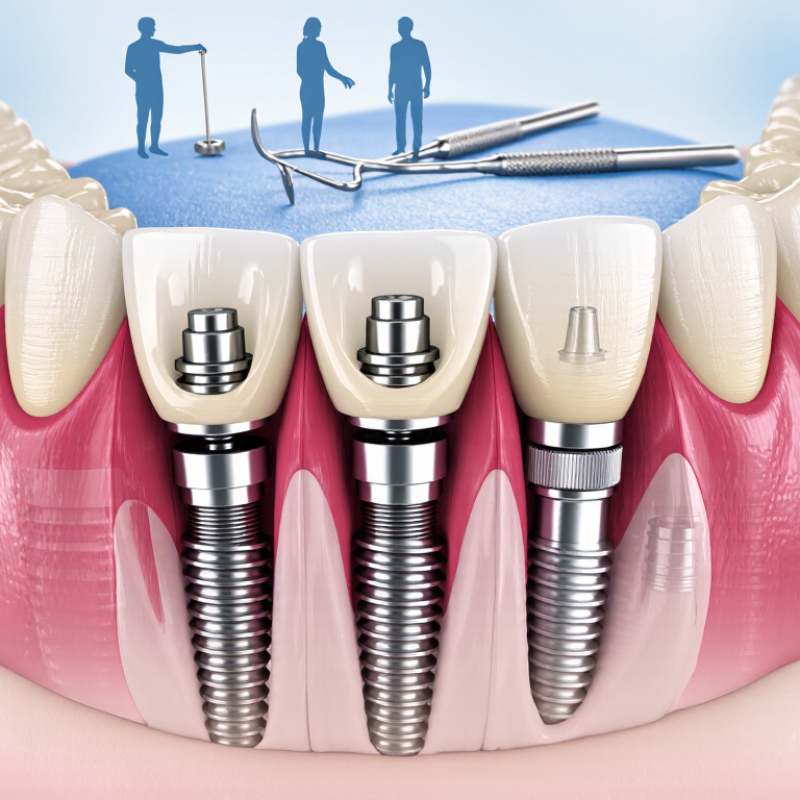
China Top 10 Implant Suppliers What Is Osseointegration?

What Osseointegration Means in Dental Implantology

In dental implantology, osseointegration describes a stable, functional connection between living jawbone and an implant surface. It is not glue, and it does not happen instantly. After placement, bone cells remodel around the implant, gradually supporting it under chewing forces. It takes time.

At first, mechanical stability comes from the implant’s fit in the prepared site. Biological stability develops as healing bone contacts the surface. These stages overlap, but they are not identical. A patient may feel little discomfort while integration is still developing, so comfort alone cannot confirm readiness for a restoration. Clinicians consider healing, imaging, bone quality, and implant stability before deciding when to proceed.

Healing varies. Bone density, surgical conditions, smoking, and general health can influence the process. An X-ray cannot show every microscopic detail. The word “integration” can sound absolute, but bone remains living tissue and continues adapting to function. Follow-up matters, especially if pain, swelling, or a loose feeling persists. Patients should follow their clinician’s guidance rather than testing the implant with hard foods too early.

How Bone Bonds with an Implant: The Stages of Healing

Osseointegration is the gradual formation of a close, stable relationship between living bone and an implant surface. It does not happen at the moment of placement. The timing varies. Bone quality, surgical conditions, and the forces placed on the implant can all affect healing.

In the first days, a blood clot and inflammatory response begin the repair process around the implant.

Then, bone-forming cells lay down early, woven bone.

Over the following weeks and months, this tissue remodels into stronger, more organized bone.

Healing is not perfectly linear. A patient may feel comfortable while the bone is still remodeling. Clinicians therefore assess the site and stability before deciding when it can bear normal chewing forces.

A 2019 systematic review in the Journal of Dentistry estimated pooled 10-year implant survival at 96.4%. That figure describes survival across studies, not a guarantee of osseointegration for any individual implant.

A stable result depends on careful assessment and follow-up, not just waiting a fixed number of weeks. Even routine healing deserves attention.

Key Factors That Affect Successful Osseointegration

China Top 10 Implant Suppliers: What Is Osseointegration?
Key Factors That Affect Successful Osseointegration

Osseointegration is the connection that forms between living bone and an implant surface. It develops during healing, not instantly. The process helps the implant tolerate everyday chewing forces. However, healing speed and stability vary from person to person.

Several factors influence the result. Bone quality and volume affect how securely an implant can be placed. Careful surgical planning and controlled placement help limit unnecessary trauma. Keeping the area clean matters, because infection can disrupt healing. Smoking, poorly controlled health conditions, and some medications may also affect recovery. A clinician should review these factors before treatment. Even with careful planning, outcomes cannot be guaranteed.

Tips: Follow your care team’s cleaning instructions, attend review visits, and report increasing pain, swelling, or looseness. Avoid changing your routine based on online advice alone. Small details matter, though no single tip replaces an individual clinical assessment.

How Osseointegration Influences Implant Design and Treatment

Osseointegration is the direct functional connection between living bone and an implant surface. After placement, bone cells gradually grow along the implant, helping it withstand everyday chewing forces. This process takes time and varies with bone quality, surgical technique, and a person’s health. The fit matters.

That biological process influences implant design. Thread shape and spacing affect how an implant engages bone during placement, while surface features can support later bone attachment. A wider implant may help in some situations, but available bone and nearby anatomical structures limit what is appropriate. More surface area alone does not guarantee success.

Treatment planning must account for healing, not just the procedure itself. Clinicians assess bone volume and density, often using imaging alongside an examination, then choose a placement approach suited to the site. Healing takes time. Follow-up checks help identify concerns before normal loading increases. A scan cannot reveal every biological difference, and healing is less tidy than diagrams suggest. That uncertainty is worth discussing openly with the treating clinician.

China Top 10 Implant Suppliers What Is Osseointegration? - How Osseointegration Influences Implant Design and Treatment

Factor Evidence-Based Overview Influence on Implant Design Treatment Considerations
Osseointegration A direct structural and functional connection between living bone and the surface of a load-bearing implant, without intervening soft tissue. Implant material, surface characteristics, and geometry are designed to support bone contact and stable fixation. Successful integration depends on the implant and the clinical conditions, including bone quality, surgical technique, and healing.
Implant material Commercially pure titanium and titanium alloys are widely used in dental implants because of their biocompatibility and mechanical properties. Material selection affects strength, corrosion behavior, and the surface presented to surrounding tissue. Material compatibility is one part of treatment planning; it does not by itself guarantee integration or treatment success.
Surface topography Implant surfaces may be machined, roughened, or otherwise modified. Surface texture can influence how bone-forming cells interact with the implant. Surface design aims to support bone apposition while maintaining appropriate mechanical and biological properties. Surface type should be considered alongside the patient’s anatomy, surgical protocol, and the intended restoration.
Surface chemistry The chemical composition and cleanliness of an implant surface influence its interaction with proteins, cells, and the surrounding biological environment. Manufacturing and surface-treatment controls help provide consistent surface properties. Proper handling and adherence to the applicable instructions for use help avoid contamination before placement.
Macrogeometry and threads Implant shape, diameter, length, and thread form affect how the implant engages bone and how forces are transferred. Geometry is selected to balance placement needs, mechanical stability, and the available bone dimensions. Implant dimensions must be planned using clinical examination and appropriate imaging; anatomy and adjacent structures constrain selection.
Primary stability Primary stability is the mechanical stability achieved at placement. It is distinct from the biological stability that develops during healing. Geometry and surgical site preparation influence initial mechanical engagement. Loading decisions should reflect clinical stability and the overall case. A single stability measurement should not replace clinical judgment.
Bone quality and quantity Bone density and available volume vary between patients and anatomical sites, affecting placement options and mechanical support. Design features may offer different options for sites with different anatomical constraints, but cannot compensate for inadequate planning. Assessment may include clinical examination and imaging. Augmentation or an alternative treatment plan may be considered when indicated.
Healing and loading time Bone healing and integration take time, and the course varies with the patient, site, procedure, and clinical protocol. Implant systems are designed for use with specified surgical and restorative protocols. Immediate, early, or delayed loading is selected case by case. No single healing interval is appropriate for every patient or site.
Occlusal forces Implants transmit functional forces to surrounding bone. Excessive or poorly distributed forces can contribute to mechanical complications and biological problems. Implant dimensions and restorative components are considered as part of the overall load-bearing design. Restoration design, bite forces, parafunction, and maintenance should be considered when planning and monitoring treatment.
Patient and site factors Smoking, oral hygiene, medical conditions, medications, and local infection can affect healing or the risk of complications. These factors do not change the implant’s basic design, but they influence whether a particular design and protocol are appropriate. Medical history, risk factors, periodontal health, and ability to maintain oral hygiene should be assessed and reviewed throughout care.

China’s Top 10 Implant Suppliers: Products and Selection Factors

China’s top ten implant suppliers should be compared by product range, documentation, and technical support, not by ranking alone. Many manufacturers offer titanium implants in different diameters and lengths, along with abutments, surgical tools, and restorative components. Some also provide zirconia options. Product catalogs may look similar, but connection designs and component compatibility can differ. Check the specifications carefully.

Osseointegration depends on several factors, including implant design, surface characteristics, and clinical conditions. A supplier’s product description cannot guarantee an outcome. Ask for clear material details, manufacturing records, sterilization information, and lot traceability. Confirm that replacement parts and compatible components will remain available. Small details matter.

Selection also requires practical checks. Review sample packaging, labeling, and instructions for use. Ask how technical questions are handled and whether product training is available. Compare delivery timelines and minimum order quantities, since these affect clinic or distributor planning. A polished catalog is not enough. Independent verification may take extra time, and supplier information can change. I would not treat any top-ten list as permanent; it is a starting point for careful evaluation, not a substitute for professional judgment.

Osseointegration: Conventional Healing Benchmarks

The chart shows classic conventional benchmarks: about 3 months for the mandible and 6 months for the maxilla before loading. These are historical guidelines, not fixed requirements; healing and loading decisions depend on bone quality, stability, grafting, and the patient’s clinical situation. They are not supplier-specific performance data.

FAQS

What does osseointegration mean?

It is a stable, functional connection between living jawbone and an implant surface. It is not glue. Bone gradually remodels around the implant, helping it handle chewing forces.

What happens after an implant is placed?

Initial stability comes from the implant’s fit in the prepared site. Biological stability develops as healing bone contacts its surface. The stages overlap, but they are different.

Can I tell an implant has healed if it does not hurt?

No. Comfort alone cannot confirm that the implant is ready for a restoration. Clinicians consider healing, imaging, bone quality, and implant stability. That distinction is easy to miss.

What can affect osseointegration?

Bone quality and volume, surgical conditions, smoking, general health, and some medications may influence healing. A clinician should review personal factors before treatment. Outcomes are not guaranteed.

How does implant design relate to bone integration?

Thread shape and spacing affect how the implant engages bone during placement. Surface features can support later bone attachment. The fit matters. More surface area alone does not ensure success.

Does a wider implant always work better?

No. The available bone and nearby anatomical structures limit what is appropriate. A wider implant may suit some situations, but size alone cannot guarantee success.

Why are follow-up visits important?

Review visits help clinicians assess healing before chewing forces increase. Imaging provides useful information, but an X-ray cannot show every microscopic detail. Healing is less tidy than diagrams suggest.

What should I do during healing?

Follow your care team’s cleaning instructions and avoid testing the implant with hard foods too early. Report increasing pain, swelling, or looseness. Small details matter.

Conclusion

What is osseointegration and why it matters is central to understanding how dental implants function. Osseointegration is the process by which living bone heals around and forms a stable connection with an implant. The article explains the stages of healing, from the body’s initial response to gradual bone formation and maturation, and describes factors that can influence success, including bone quality, implant placement, overall health, and aftercare.

It also explores how this biological process informs implant design and treatment planning, such as the choice of materials, surface features, and healing timelines. The overview of China’s top implant suppliers focuses on product categories and practical selection factors rather than brand names, including manufacturing consistency, technical documentation, product range, and suitability for clinical needs. Together, these topics help readers understand both the science behind implant stability and the considerations involved in evaluating suppliers.

Madeline

Madeline

Madeline is a dedicated marketing professional with a wealth of expertise in our company's core offerings. With a keen understanding of the industry, she brings a unique perspective to her role, consistently delivering high-quality content that highlights the superior aspects of our products. As......